The Ennea bass started as a Doublecut. Here's how it became a singlecut — starting with a fittingly strange build.
There was a growing demand for singlecut basses and so it was a matter of time when one of the customers asked for a singlecut Ennea. And of course it couldn't be that simple. Not only it was a new form factor, it was also a lefty… and a 3-string!
Going between a doublecut and a singlecut version of the same design is never obvious - the proportions work differently with all that visual mass over the neck. Now add to this a super narrow neck and it’s getting even more interesting. That was part of the reason for introducing that scoop on the upper horn.

Weirdly enough, the fact that the customer wanted 2 extenders actually helped - it forced me to keep a larger headstock that helped with visually balancing the whole thing.
Balance and visual weight are just some of the things I will be teaching in the upcoming Guitar Design course, for those who are interested.
THE NECK
A 3-string neck, especially considering a 36” scale, wasn’t just feeling strange. I suddenly had to watch out for side-to-side movement apart from the expected relief challenges. I think it was one of the first builds to receive full length carbon reinforcement.


THE BODY
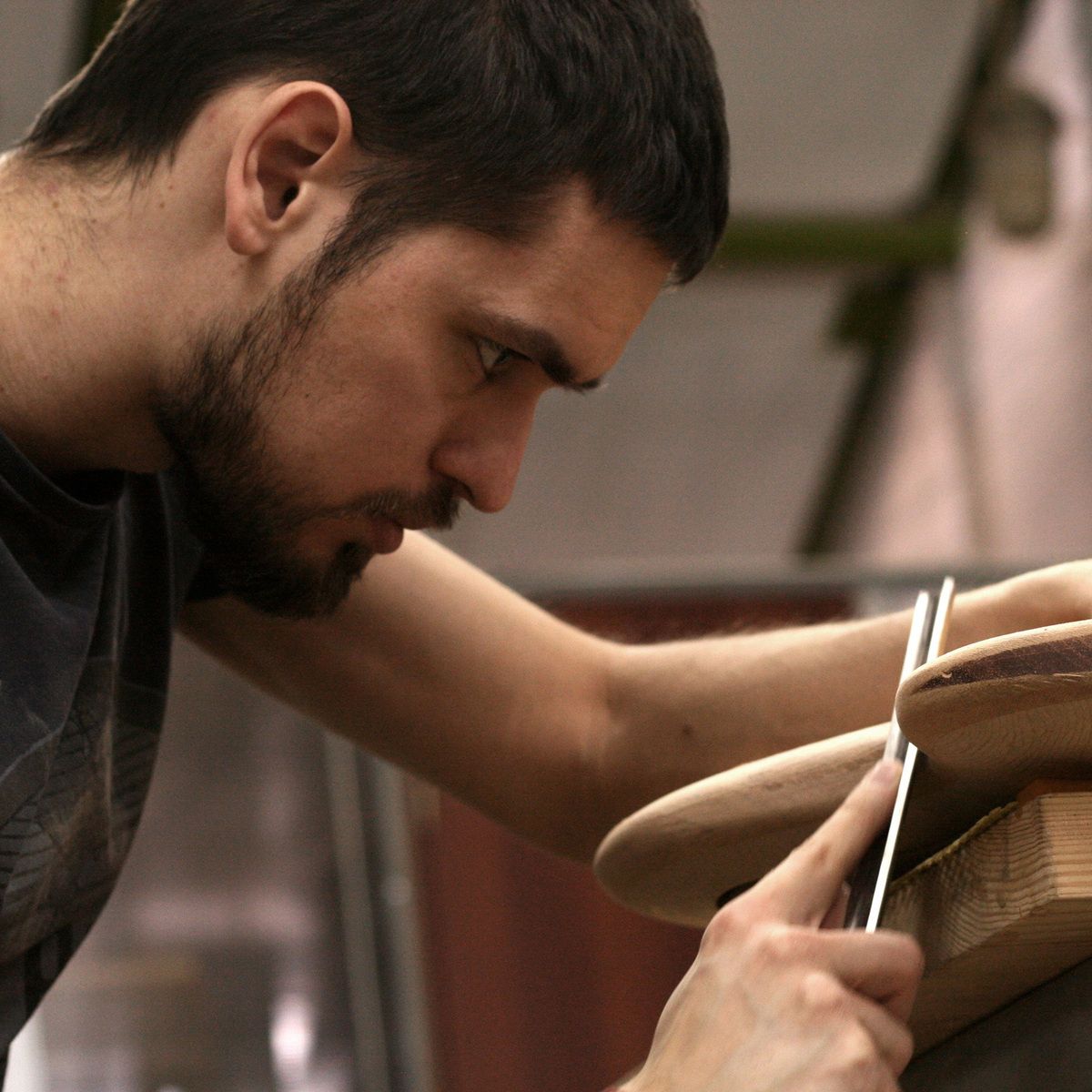
At this point I was still carving Ennea bodies by hand, and especially on prototypes like this one. Remember, it’s the Northern Ash, hard as hell!


I still wasn’t sure what the heel would look like, so I just kept carving after the neck was glued in.

You can also watch the full timelapse of this build:
Once the carving was done, the rest was familiar if not simple - applying that trademark inverse ceruse finish


Since then, the majority of Ennea orders have been singlecuts.

And eventually, by another growing demand it transformed into a headless, with it’s own set of challenges.
